
Tag Archives: Lindy Hop

Please help us catalog new music

A Swing Band leader (Glenn Crytzer) reached out to me recently, asking if it would be possible to add his entire catalog to the music4dance.net database. He found a few of his songs already listed, but has a published catalog of well over a hundred songs, most of which should be danceable to partner dances (mostly Swing variations).

Glenn graciously provided me with a spreadsheet of his music, and I was able to upload it to music4dance. This was particularly nice because I could include his data on tempo and genre tags, as well as some other miscellaneous metadata from his comments that I turned into tags. But that led me to the next issue – his data didn’t include anything about which dance or dances would be particularly suitable for each of the songs. Which is entirely reasonable, he’s not actually dancing to them, and most of them would work for a generic swing night – the dancers can choose to dance Lindy, Balboa, East Coast, or something else to any particular song. Although that’s a vast over-simplification, if you’re interested in how a musician thinks about these things, Glenn’s article On Programming an Original Swing Music Album is an illuminating read.

That leaves me in a bit of a bind. I can certainly go through the 100+ songs myself and vote on which dances work for those songs, and I probably will. But I dance East and West Coast Swing and a bit of Lindy and Charleston – oh, and a bit of Slow Foxtrot, as Foxtrot and Swing music overlap – so I’m not familiar enough with some of the other dances to say whether a song would be suitable for Balboa, Jump Swing, Quickstep, etc. And more importantly, even with the dances I do know well, I’m only one opinion. Music4dance works much better when others in the community contribute by voting on dances that they are familiar with for songs in the catalog.

That line of reasoning led me down the path that I’ve considered several times before, of unlocking premium membership for free for members who vote on dances. I’ve thought and rejected several complex mechanisms to enable this. While some of them seem plausible, I don’t want to spend time writing code until I prove that there are enough members of the music4dance community willing to participate to make it worth my while.

Something about the interaction with Glenn and the thought that I’d love to get his songs showing up with associated dances sooner rather than later made me look at the problem a little differently. What if I went the low-tech/high-trust method of giving out premium memberships to anyone who committed to voting on a certain number of songs per month? I wouldn’t have to write any code at all for that, and if enough people take me up on it to make manual management of the “feature” cumbersome, I can always write the code later. That will also let me play with the parameters without building a whole dashboard of knobs and dials.

The Offer:

If you are familiar enough with at least one dance to confidently listen to an arbitrary song and say, “I would dance that dance to the song,” and are willing to spend some time each month doing that on the music4dance website, I’ll extend you a premium membership for each month that you do. Furthermore, I’ll take your word for it and give you the premium membership ahead of time. That will let you look at songs that no one has voted on yet (which is essential for things like the Glenn Crytzer catalog – at least until someone has voted on a song). To make this somewhat measurable on my end, let’s set the number of votes at 50 per month to keep your premium membership going. I’ll reserve the right to change the parameters at any time, including cancelling the program, since this is an experiment. But at minimum, if you contact me to try this out, you’ll get the first month of premium free, and I won’t turn that off before the end of the first month unless I detect you doing something malicious.

Why should you care about a premium account? In this case, it allows you access to more songs, including songs that no one has voted on yet and songs that I’ve pulled in from someone’s list of danceable songs but haven’t matched to a music catalog. With a premium account, ad content is turned off, and you can export results of your searches to Spotify – see details here.

Musicians (a quick aside):

Before I get into the nitty-gritty details of how to take me up on this offer, let me take a moment to reach out to other musicians who would perform music suitable for partner dancers. If you are interested in having me bulk upload your catalog to music4dance, please contact me, and I’d be happy to do that.

Here’s how to go about taking me up on my offer:

  • Create an account on music4dance.net here if you don’t have one already. (Account management help)
  • Email me at info@music4dance.net from the email you used to create your music4dance account and include “I’d like to Help Cataloging Music” in the title. Feel free to include any other details you’d like to share or questions about the offer in the email. I read everything that I get.
  • I expect to be able to upgrade your account and respond to your email within forty-eight hours (but this is an intention, not a commitment – read the notes above about this being an experiment) – if you haven’t heard from me in that timeframe, please try again.
  • Read the information about Dance Tags to understand how to vote.
  • Start voting!

This offer is for voting on dances, not for clicking the like button on songs. The latter is a feature that helps you organize your use of the music4dance catalog, but doesn’t do much for other users, so I’d like to focus on the core music-to-dance relationship of the voting mechanism for this offer.

Useful links:

What if you want to support music4dance but don’t have either the time or the experience to catalog songs by dance? There are plenty of other ways to contribute, as described on our “Contribute” page.
What is that dance called? Swing, East Coast Swing, Triple Swing, East Coast, or…

When I got into the business of categorizing music by dance style, I knew there would be a lot of ambiguity involved. However, some of the passion behind people’s opinions about what a dance should be called or what tempos are acceptable for the dance called X still takes me by surprise. Several times a year, I get an email from someone who is absolutely livid that I “got the tempo of West Coast Swing completely wrong” or called a dance “Lindy Hop” rather than “Swing” or some other variation on the theme.

I learn a lot from the people who send these emails, and often learn something that helps me improve the site or my general knowledge of dance. One feature I added a while back, based on some of these interactions but haven’t discussed in the blog, was the idea of having “synonyms” for dances.

The way music4dance works, I have to have an unambiguous and unique name for a dance. This leads to somewhat clunky names at times – for instance, the dance that most dances consider “Waltz,” I call “Slow Waltz” to distinguish it from “Viennese Waltz” and to allow for a catch-all category of Waltz. But I want to be able to show other names for dances so people can find the dances even if they know them by another name. This applies both to cases where the dance really is the exact same dance; it’s just named differently to disambiguate it, and in cases where the parameters for what music works are close enough that it makes sense to use the same list of music for both dances.

Cases of actual synonyms:

Cases where the dances are different, but the music is the same:

  • Castle Foxtrot = Slow Dance – I started categorizing music that was basically Slow Dance music as Castle Foxtrot, which is a legacy dance that some studios occasionally teach because Castle Foxtrot showed up in my searches as I was designing the site, and fit nicely into the tempo spectrum of Foxtrot-like dances. The practical use of this ended up being more for people looking for “Slow Dance” music in wedding contexts, so I added the Slow Dance synonym. Perhaps I should change the primary name?
  • Hustle = DiscoFox – As far as I can tell, these have evolved into different dances but are still danced to similar music. But that is based on web searching rather than personal experience, so please correct me if I’m wrong. I’m also now second-guessing myself as to whether I should add “Swing Fox,” “Disco Swing,” and “Rock Fox” as synonyms, or if one or more of these rates is its own category.

In any case, if you go to the main “Dance Style” page, you’ll see all the styles we’ve set up, along with their synonyms. As this list grows, being able to filter it is more important, so the filter control acts on both the primary name and the synonym. I also handle the synonyms when you search in the search control in the menu bar. So if you type “Slow Dance” in that search box, you’ll find a list of slow dance songs (that are actually tagged as “Castle Foxtrot”). I don’t convert the name of the tag in the results, but I could if that seems important…

I’m posting this now in part because, during my recent round of updates, I broke the showing of synonyms in the Dance Styles page and then realized I hadn’t ever asked for feedback on the feature. The only mention in this blog was the post when I added it as an afterthought to adding Single Swing to the catalog.

Are there other synonyms that I should add? Are there dances that I’ve listed as synonyms that I should break out into separate dances? If you have ideas about this post or the site, comment below or use other feedback mechanisms listed here. And if you enjoy the site or the blog (or both), please consider contributing in whatever way makes sense for you.

What Happens When a Song is Danced at Different Tempos?

Sometimes, a song can be a perfectly good Bolero when heard one way but a Salsa when counting the music differently. Another example is Slow Dance (Castle Foxtrot) vs. Lindy Hop.

Generally, this phenomenon is because, with some music, it’s easy to count what the musicians see as either a half note or a quarter note as a beat. Quarter note vs. eight note is another common variation. At one point, I tried to tag dances as half-time or double-time when I saw songs with this property. But honestly, I can tie my head up in knots when I look back at this. Am I dancing double-time to the music (e.g., stepping twice as fast), or is the music half-time to my dance? And, that ‘solution’ also has the limitation that there is no way to sort or filter on tempo and include those songs correctly without doing two searches (maybe 3) and then weaving the results together ‘manually.’

And that doesn’t even take into account Waltzes, where you can get into other fun variations that I talked about in my fake waltz post.

A more robust solution to this problem is to have a separate tempo field for each dance. This would only be filled in if the dance had a positive number of votes. Then, if you search on Foxtrot and sort by tempo, the Foxtrot tempo field will be used. If you search on multiple dances or didn’t include a dance in a search and sort on tempo, I’d have to default to some master tempo field. If I went down this path, I’d have to populate the ‘dance’ tempo fields off of the master tempo fields by default and do some manual searching for the exceptions (and depend on others to update them as they see them).

What do you think? Would this be a significant improvement in how you use music4dance? Or is it a corner-enough case that you’ve never noticed and would prefer I spend my time on improvements in other areas?

Please share any thoughts and ideas about this post or the site by commenting below or using other feedback mechanisms listed here. In addition, if you enjoy the site or the blog (or both), please consider contributing in whatever way makes sense for you.

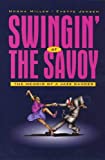
Book Review: Swingin’ at the Savoy: The Memoir of a Jazz Dancer

Swingin’ at the Savoy is a beautiful memoir of one of the greatest Lindy Hop dancers of all time. Ms. Miller was not only one of the dancers that defined Lindy Hop, but as Lindy Hop faded for a while post World War II, she launched a career as a Jazz Dancer.

It’s a real treat to see a slice of history that’s so important to American partner dancing through the eyes of one of its early practitioners. 

I was especially touched by being able to catch a glimpse of what it was like to be a strong woman of color in a male-dominated world. Ms. Miller jumps from the pain of the internal politics of Whitey’s Lindy Hoppers to the joy of dancing to Artie Shaw and Benny Goodman to tales of traveling overseas.

There is, unsurprisingly, a good amount of overlap between this memoir and Frankie Manning’s Ambassador of Lindy Hop. Having read them both, I feel like they complement each other and help paint the picture of the early Lindy Hop scene from somewhat different perspectives.

I grew up listening to and playing Big Band Music – Count BasieGlen Miller, and Duke Ellington were some of my favorites in the genre, and she met and danced to them all live. Even though I built music4dnace.net in part to be able to find songs to dance to that aren’t part of the genre that they evolved with, one of the reasons I was attracted to Swing dancing in the first place is my love for Swing Music.  

Another tidbit in this memoir was the mention of the “Savoy Hostesses” and the fact that you could purchase a dance with one for a quarter. They would even teach you to dance if necessary. This was the first I had seen of historical backing for the core plot line of a fun coming-of-age novel I read a while back called Ten Cents a Dance. Set in a 1940’s Chicago dance hall, the main character is something like what Ms. Miller describes as the Savoy Hostess. Of course, as I write this, I realize I must not have done even a light search on the background when I read the book. There is plenty of information about “Taxi Dancers” and even a song, a film, and another book called “Ten Cents a Dance,” all about dance hostesses or taxi dancers.

Swingin’ at the Savoy also includes a preface and epilogue that give some great context. “Portrait of the Swing Era” has a bunch of great tidbits, including some history of the Jitterbug that I’m hoping to do some more reading on and share with you. And “The Future of the Lindy and The New York Swing Dance Society” puts some perspective on the New York Swing revival.

Overall, Swingin’ the Savoy is an enlightening read about a fantastic woman.

As always, I’m interested in your feedback, so please share any thoughts and ideas about this post or the site by commenting below or using other feedback mechanisms listed here. In addition, if you enjoy the site or the blog (or both), please consider contributing in whatever way that makes sense for you.


Swingin’ at the Savoy: Paperback Edition

Swingin’ at the Savoy: Audible

Note: If you found this book through this blog, please be kind and click on one of the links above to purchase it. This helps support the blog. If you’re feeling especially generous (or just like the blog a lot), clicking on the Amazon links in the blog or on the music4dance site and then doing your regular, unrelated shopping, which also helps support the site as a very small fraction of those proceeds will be directed to musci4dance.

Ask music4dance: Should you add a Single Swing Dance category?

Arne had another great question (paraphrased): I see Single Swing being danced a lot these days.  Should music4dance add another swing category? Is Single Swing a local thing, national, really new? Do people still dance triple-step Swing?

Here is a slightly cleaned-up version of my response:

East Coast Swing (the triple step variety) is a competition dance, so it’s still being danced regularly in ballroom environments. But the Lindy revival of the ’90s seems to have dominated the social swing scene from what I can tell.

In the ballroom community that I learned to dance in during the ’90s, they used the term East Coast Swing to refer to the competition dance, which was definitely a triple-swing. But if one was dancing socially to music too fast to comfortable dance triple swing, you would revert to something they were calling Single Swing or East Coast Single Swing or some variation on that.

I fell down a rabbit hole, trying to see if my recollection had anything to do with current thinking on this. This video shows a “Single Swing” basic that is exactly what I think of as Single Swing. Duet Dance and DanceTime both have descriptions of various kinds of swings. They seem to agree that what I think of as Single Swing could also be reasonably called “The Jitterbug” (which I had thought was just a different name for Lindy Hop). As with any of this stuff, the history is so twisted up that there probably isn’t a correct answer, or if there is, it would require a historian to dig up.

Even without adding a new dance, you should be able to find some good ideas for Single Swings by searching for generic Swing in the tempo range between 140 and 184 MPM. When I first responded to Arne, I had broken that feature, but it’s now up and running again. So you can go to the Advanced Search Page, choose Swing in the dances section, and type in the tempo range you’d like to filter on. 

I am interested in incorporating Single Swing into the music4dance catalog. Should I do this as Jitterbug or Single Swing or by adding single and triple tags to East Coast Swing? I’d love to get others’ thoughts on this so please feel free to send feedback.

Asking to add a new dance style to the catalog is certainly in the top ten questions I’ve been getting. So I’ve been working on streamlining how I manage dance information to make that easier. Most of this work has been under the hood (although the bug mentioned above was one side effect). One of the more visible aspects of this is a small redesign of the Dance Styles page to simplify it a bit and hopefully make it a little more usable.

As always, I’m very interested in your feedback, so please share any thoughts and ideas you have about this post or the site by commenting below or using other feedback mechanisms listed here. In addition, if you enjoy the site or the blog (or both), please consider contributing in whatever way that makes sense for you.

Dance as Language

I was delighted to find that the folks at the Rough Translation podcast produced an episode called May We Have This Dance?  For those who haven’t heard of it, Rough Translation describes itself as “a podcast about cultural mistranslation and what we can learn from them.”

In this episode, they explore the Lindy Hop and its odd evolution from a dance created by African Americans in 1920s Harlem to its revival when it was adopted by the Scandinavians (and others) in the 1990s.  Not being from either culture, I don’t feel equipped to talk about the core of the cultural issues addressed in the podcast and accompanying article.  But I would recommend both Frankie Manning: Ambassador of Lindy Hop and Stompin’ at the Savoy if the podcast piques your interest in the origins of the whole swing family of dances.  In addition, I haven’t read Swingin’ the Savoy yet but it is definitely going into my queue.

I will say that I particularly liked the discussion at about 30 minutes into the podcast about when LaTasha and Felix clicked as dance partners and dance became like a conversation.  I feel like the best of my social partner dancing has felt like speaking a language that’s more expressive than English.

Definitely check out the reference material they have at the end – if you haven’t seen the Lindy Hop sequence from Hellzapoppin, you’re in for a real treat and the clip of LaTasha and Felix was lots of fun as well.

Finally – they provided a list of LaTasha’s favorite music to dance to which I added to the music4dance catalog and then exported as a Spotify playlist.

As always, I’m happy for feedback and if you enjoy the site or the blog, please consider contributing in whatever way that makes sense for you.

The Pink Martini Solution

Not all artists are created equal when it comes to creating dance-able music.  For instance, one of my favorite artists of all time is John Coltrane.  Do you see him well represented in the music4dance catalog?  Absolutely not.   Because a consistent tempo just isn’t a core part of his music.  Which is part of the appeal when listening, but doesn’t work particularly well when trying to Lindy Hop.

Towards the opposite end of the spectrum, sits Pink Martini.  They are a band that plays a combination of original works and updated covers of classic melodies.  Many of both types of song are in a musical style that co-evolved with a partner dance.  Take “Let’s Never Stop Falling In Love“, which is a classic Tango if I ever did hear one, but still has the unique Pink Martini flare.  Or “Amado Mio“, which has a extremely dance-able Rumba beat.  And don’t forget “Hang On Little Tomato“, a wonderful Foxtrot as long as you can dance through the lyrics without cracking up, or possibly tearing up.  That little tomato has quite a challenge ahead of him!  And if you are up for a challenge yourself, try to West Coast Swing to “Hey Eugene” while keeping a straight face.

Pink Martini’s catalog is both broad and deep and most of their songs are well suited to partner dances.  Check them out on music4dance.net and if you like what you hear, let me know and I’ll catalog some more of their songs.