Ballroom Christmas Music (2023)

Christmas and other holiday dances are just around the corner, so it’s time to take another look at music ideas to partner dance to.  I haven’t made any major changes to the Holiday Dance Pages this year, but there is plenty of new music to browse.  Last year, we were at 667 songs, and I was hoping to break 1000 for this year.  Which we did.  As of this writing, music4dance has 1536 songs cataloged that are tagged as both Holiday and have some kind of partner dance associated with them.

Thanks to everyone who has contributed to this effort!

Hear the Beat, Feel the Music:  James Joseph

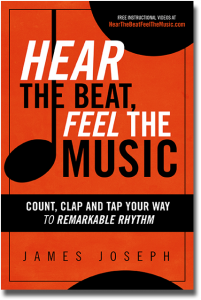
This Holiday season, I am trying something new.  I’ve partnered with James Joseph to offer a special holiday promotion.  From now until the end of the year, if you support music4dance by subscribing at the Bronze ($25) level or donating $25, you’ll receive an electronic copy of Jim’s book Hear the Beat, Feal the Music .  This is a great resource for dancers working on improving their musicality (see my full review here), and I’m grateful to Jim for providing this opportunity for the music4dance community.

Click here to subscribe or donate.

If you aren’t in a position to provide financial support for this project, there are plenty of other ways to contribute.  Specifically, to help build the Holiday Music catalog, you can:

  • Browse our music catalog and tag songs as Holiday when you find them.
  • Add new music through the Add Song form.
  • If you have a list of holiday songs categorized by dance style that you are willing to share, please email me at info@music4dance.net or contact me through the feedback form.

As always, if you have comments or suggestions, please reply to this post or contact me here. Please consider helping with the music4dance project either by helping with the Holiday Music catalog mentioned above or any other ways listed on the “Contribute” page.

Ballroom Dancing to Whitney Houston and Taylor Swift

The recent Dancing With the Stars episodes featuring Whitney Houston and Taylor Swift‘s music caused a significant spike in traffic at music4dance.net, with dancers looking for music by those artists.

I find this exciting for many reasons.  There’s the obvious reason that more traffic means more people showing interest in this project.  It also reinforces the idea that dancing to music you enjoy is good, even if it’s not exactly the music that co-evolved with the dance.  This is one of the reasons I started music4dance in the first place and one of the reasons that I continue to spend time on the site. Another reason I’m excited is that even without doing a push, as of this writing, 58 Taylor Swift and 37 Whitney Houston songs are tagged with some kind of dance in the music4dance catalog.

It also made me realize that I haven’t checked in on how well the site handles searching by artist in years.

Here’s a quick overview of what the site currently provides.

  • Do a general search for an artist’s name either from the search control in the title bar or from the main song library page
  • This will result in a list of songs, many of which have the artist you searched for listed in the artist field.
  • At that point, clicking on the artist’s name will take you to a list of songs that we’ve cataloged by that artist.

This generally works1, and a significant number of people are landing on the Taylor Swift and Whitney Houston pages, so I have to count that as a success.

There are also some significant drawbacks that I can see and likely plenty that I can’t.  So, I will generate a quick list here for your perusal.  Please respond with feedback if you find any of these particularly onerous or if there are issues not on this list that you find more annoying.

  • There is no way to get to a list of artists cataloged on music4dance, so you have to do a general search for artists to get to a link that will take you to the artist page.
  • The artist field is a general text field, so typos and variations creep in2.
  • The artist page is pretty sparse; it’s just a list of songs that contain the artist’s name in the artist field. There are probably other things that we could include on the page.

What do you think? Are these your top issues with how I’m handling artists? Or are there other things that you find more pressing? Let me know, either way.

As always, I’m very interested in your feedback and read every comment and email. So please share any thoughts and ideas about this post or about the site by commenting below or using other feedback mechanisms listed here. In addition, if you enjoy the site or the blog (or both), please consider contributing in whatever way makes sense for you.

P.S. I’m working on getting out my annual holiday music post. Meanwhile, if you’re looking to put together a holiday playlist or searching for the perfect song for that holiday party exhibition piece, the posts from previous years should give you something to start with. Or you can just head to the holiday music page and see what you find.

Related Posts

What are your favorite Prince songs for partner dancing?

Update 2024: The content of the post is still generally accurate. There is a more recent post that outlines a new feature that adds yet another way to narrow down songs that have “Prince” in the artist’s name. New Feature: Improved Text Searching I, like many, am mourning and listening to Prince’s music. Over and…

The Pink Martini Solution

Not all artists are created equal when it comes to creating dance-able music.  For instance, one of my favorite artists of all time is John Coltrane.  Do you see him well represented in the music4dance catalog?  Absolutely not.   Because a consistent tempo just isn’t a core part of his music.  Which is part of the…

  1. And – bonus – their names correctly autocomplete when you type them in the search box.  This seems like a simple thing that one would expect in any search box on any site, but it’s a pretty heavy lift to get working correctly. ↩︎
  2.  I intentionally de-emphasized the artist in my original site design.  The artist field is just a free text field that can contain anything.  That ends up being somewhat random, between what I’ve pulled from various sources and what users have entered.  In the case of Whitney Houston,  Hold Me is listed with Whitney Houston & Teddy Pendergrass as the artists.  This works all right since the Whitney Houston artist page is just a search for the keywords “Whitney Houston” in the artist field.  But in the case of Taylor Swift, there are several songs that are listed as “Feat. Taylor Swift” in the title and her name isn’t in the artist field at all.  So they wouldn’t show up on the Taylor Swift page.  The Joker and the Queen by Ed Sheeran is one example of this issue.  One fix to this is to do some cleaning up of the catalog and make sure that the featured artists show up in the artist field as well as (or instead of) the title field.  Another is to take a step back and build a more complex scheme, possibly leaning on something like musicbrainz.org to center more on artists. ↩︎

Translating how dance teachers count

Something came up the other day as I was talking to a friend who just took his first social dance class. He has a musical background and is used to hearing and counting beats as a musician. So he got a little obsessed and distracted with figuring out the translation between what he was hearing in the music and what he was hearing from the dance teacher. In this casual intro to partner dancing class at the local community college, he was learning Night Club Two StepSalsa, and East Coast Swing.

We dance all of those styles to music in 4/4 time. So, as someone with musical training, my friend heard the beat as 1 - 2 - 3 - 4 - 1 - 2 - 3 - 4, etc. But that’s not how the dance teacher was counting. Let’s break these down dance by dance.

Night Club Two Step

Night Club Two Step is generally counted as Slow - Quick - Quick.  For most dances that I count this way or the slight variation Quick - Quick - Slow, the Slow is two beats, and the quicks are each a single beat. The translation is straightforward: In the first case, the quicks are on 1 and 2, and the slow is on 3. In the second, the Slow is stepped on 1, and the quicks are 3 and 4.

– or –

Each box represents a quarter note in 4/4 time.

Salsa

Salsa is even easier. If it’s counted using slows and quicks, it’s Quick - Quick - Slow. Translation: quicks on beats 1 and 2 and slow on 3, holding 4. But many salsa teachers count the phrase, which is a two-measure grouping in dance. When they do that, they generally count 1 - 2 - 3 - (pause) - 5 - 6 - 7 - (pause). That’s my preferred way since it aligns with the musical counting of the beats. Occasionally, I’ve heard a Salsa teacher count 1 - 2 - 3 - (pause) - 4 - 5 - 6 - (pause). That variation drives me up the wall. It completely breaks my musician/programmer’s brain because the second measure is counted with numbers that are off by one from what’s in my head. Fortunately, my friend wasn’t exposed to that variation. 

Each box represents a quarter note in 4/4 time.

East Coast Swing 

East Coast Swing is more complicated for a couple of reasons. 

First, it is generally counted as Tri-ple-step Tri-ple-step Rock Step. Or 1 & 2 - 3 & 4 - 5 - 6. We’re dancing a 6-count basic to 4/4 music, so each basic takes a measure and a half. This timing throws a monkey wrench into counting it like a musician. If you want to be a stickler, it would be something like 1 & 2 - 3 & 4 - 1 - 2, and then the following basic would be 3 & 4 - 1 & 2 - 3 - 4, but I’ve never even tried to do that while dancing. The second is that the triple steps are syncopated, so they don’t fall precisely on the eight notes. But this also maps directly to the music, so it shouldn’t be hard for anyone who has played a bit of Jazz to get their head wrapped around.

Each box represents an eighth note in 4/4 time

Conclusions

Every dance has its nuances. Mambo and International Rumba are counted Quick - Quick - Slow, but start on the 2, Waltzes are danced to 3/4, Samba has its own form of syncopation, etc.

Let me know if you find this kind of analysis helpful and would like this kind of analysis for other dances. I’m considering doing a version of this for each dance on the dance pages, including some prettier charts, if I get some feedback that this is useful. Also, I’d be delighted to hear about other ways you count when partner dancing.

As always, I’m very interested in your feedback, so please share any thoughts and ideas about this post or the site by commenting below or using other feedback mechanisms listed here. In addition, if you enjoy the site or the blog (or both), please consider contributing in whatever way makes sense for you.

Related Posts

Do Dancers Think in Eights?

I was tickled to hear Nigel Lythgoe talk a little about choreographing tap on a recent episode of So You Think You Can Dance. The commentary is at about 1:13, but please start at about 1:10 so you can see the performance that he’s referring to.  It’s a tap piece that Emma, one of the…

Book Review: Hear the Beat, Feel the Music

As anyone who has spent any time reading my blog or interacting with my website should know by now, I’m very passionate about music, dance and the relationship between the two.  I’m also very analytical about those subjects.  And, yes, I believe passion and analysis can co-exist, don’t you? The fatal flaw with my perspective…

Are you ready for your Halloween Dance?

Whether you’re a DJ getting your playlist together or a performer looking for that perfect song to craft a routine to, our Halloween collection is a great place to start. I’ve recently spent some time expanding the catalog. As of this writing, there are 222 songs tagged as Halloween with at least one vote for some kind of partner dance like Foxtrot, Cha-Cha, or Salsa.

Several years ago, I made an initial pass at taking generic Halloween playlists and cross-referencing them with the music4dance catalog of songs tagged by dance style. At the time, I did the simplest possible thing: I imported the songs from some Halloween catalogs and then put a link in the songs menu that went to that query. At the time, 80 songs were tagged as Halloween and associated with a dance.

This seemed fine at the time, but recently, I noticed folks searching on the keyword “Halloween.” What does that get someone beyond the songs I had explicitly imported a while ago? One of the side-effects of the system is that I link as many albums that a song has been released on as I can. This means that if a song lands on “Halloween Hits” or something like it, searching by the Halloween keyword will find it even though no one in the music4dance universe tagged it as such.

So, over the last few days, I spent some time reviewing that list and adding an explicit “Halloween” tag where I felt it was appropriate. For the most part, if the song was included on a Halloween Party album, I included it. But I didn’t include songs that were merely on an album because they were used in a horror movie. Some songs will still appear in a search for Halloween that aren’t in the explicit Halloween catalog. If you find one that would make sense to include in a Halloween dance, please tag it.

As I mentioned earlier, between the general evolution of the music4dance catalog and my current efforts, there are, as of this writing, 222 songs that are tagged as Halloween and also have at least one dance vote.

That starts to get interesting and motivated me to generalize the code I wrote a while back for Christmas/Winter holiday music to create a dedicated Halloween page. That’s where you’ll land if you choose Music -> Halloween from the main menu. And that gives an easy route to finding all the Halloween songs to dance a Single Swing to (for instance). You could have done that with the old system, but folks don’t always find the advanced search; this makes things a little easier. In addition, this gave me a smooth path to exporting the results to Spotify. Now, each Halloween Dance page has a Spotify widget with the playlist, and you can go to the music4dance Spotify account and browse the Halloween Playlists. While you’re there, please like the playlist and the music4dance account, which helps spread the word.

As always, I’m very interested in your feedback, so please share any thoughts and ideas about this post or the site by commenting below or using other feedback mechanisms listed here. In addition, if you enjoy the site or the blog (or both), please consider contributing in whatever way makes sense for you.

Introducing the music4dance technical blog

When I started the music4dance blog nearly a decade ago, I considered including a technical component by writing about the challenges of building and maintaining the site. A good friend talked me out of doing that, and I still think it’s the right decision. I’m assuming most of the audience for this blog isn’t particularly interested in what I’ve done to build the site. You’re interested in what you can do with the site, learning more about the relationship between music and partner dancing, and how to find music to dance to. If I’m wrong about you, please let me know; if I get more than a few direct responses, I’ll set up a poll and consider a pivot based on the results.

am disappointed I never got around to spinning up a technical blog. I’ve learned much over the years while building and maintaining this site. And I generally feel the need to share when solving technical problems. Now that I’m not leading a team of engineers, I’ve given up my primary outlet. So, it finally tipped the balance, and I’ve started some technical writing.

I decided to use medium.com to host my technical writing. That removed the barrier to entry of setting up another site and spinning on what technology to use, and I’ve been happy with the platform. The first series of posts is only tangentially music4dance related but is still motivated by this project. I use a simplified version of the tempo counter applet from the website to compare the experience of writing that app on several multi-platform frameworks. In addition, I took the opportunity to write about my experience in helping build the foundation for Microsoft’s version of that solution. So, if you have a technical bent, please take a look – the first post is “Which Multi-platform framework should I use to write my app?” And if you like it, please do the things that help spread the word. With medium, those things are to clap, follow, and share the link with friends.

As always, I’m very interested in your feedback and read every comment and email. So please share any thoughts and ideas about this post or about the site by commenting below or using other feedback mechanisms listed here. In addition, if you enjoy the site or the blog (or both), please consider contributing in whatever way makes sense for you.

Post #100: Music4Dance Turns Ten

My first blog post was in July 2014. I had early versions of the website up and running for about a year before starting the blog, so the site is just about ten years old.

It’s been an adventure building music4dance over the years. I’ve been thrilled when others have piped up and expressed opinions about how the site works. So for those of you that have done that, thanks! And for those that haven’t yet, feel free to get in touch. The more feedback I get, the better the site will become. 

My motivation for building and expanding music4dance has changed over the years. Initially, it was to retrain as a full-stack developer and take an (admittedly pretty weak) stab at seeing if this idea that had been floating in my head for years could become a business. I succeeded in the former, landing a job as a full-stack developer (or at least a hands-on manager of full-stack developers). Of course, the business never really turned profitable, as I’ve mentioned before.

Once I was working full time, I had to pull back on how much time I was spending on music4dance. I kept at it partly because this is a labor of love. But also because it gave me some coding time outside of work. And I could move the music4dance technology stack ahead of the codebase I was responsible for at work, which was incredibly useful at the time.

I’m sure there will be other transitions and focus changes over the years coming years.

The site itself has been through some significant reworks over that time. I moved the core database engine from Microsoft SQL Server to Azure Cognitive Search and changed the core client-side rendering from the asp.net framework with a sprinkling of knockout.js to vue.js backed by a thin layer of asp.net core.

This blog has gone through several iterations under the hood, but it’s been a pretty plain vanilla WordPress site for the whole time. The (mostly) invisible changes have been around how I have hosted the site, the most recent being that I gave up on self-hosting and now just run the site on WordPress.com. Over the last nine years, I’ve written 100 posts (this post is coincidently an approximate 10th anniversary and an exact 100th post). Some posts hold up pretty well, some could use a facelift, and a few are stale or just plain misleading. Given the vagaries of search engines, I dislike taking down posts. But it’s well past time to impose some order on the chaos, update some of the most outdated posts, and make it easier to find what you’re looking for in the mass of words.

So, I went through all the old posts and categorized them. I think I’ve managed a reasonable taxonomy of posts, although kind of like dance styles, not everything fits as neatly as I’d like:

About music4dance: Posts about the music4dance.net site features, excluding features specifically about searching for music.

Searching for Music: Posts that are about searching for songs, excluding those about special occasions

Special Occasions: Searching for music related to special occasions (Holidays, Weddings, etc.)

Music and Dance: Posts about music as it relates to dance and dance as it relates to music.

Reviews: Reviews of books, podcasts, websites, etc.

Archive: Posts that are no longer relevant

I also intend to go through and produce fresh versions of some essential content when it’s gone stale, like I did recently with the wedding music posts (part 1 & part 2).

As always, I’m very interested in your feedback and read every comment and email. So please share any thoughts and ideas about this post or about the site by commenting below or using other feedback mechanisms listed here. In addition, if you enjoy the site or the blog (or both), please consider contributing in whatever way makes sense for you.

P.S. As I started re-organizing the blog, I didn’t realize that an update as minor as adding a category would re-publish a post to my linked-in and Facebook feeds, so all of you who follow me on those platforms; sorry for the spam; I’ll try to do better in the future.

We’d like to dance a “real” partner dance as the first dance at our wedding (Part II: We already chose our dance)

Last time I wrote about how music4dance can help you find a dance to match the song you’d like to dance to for your first dance (or other wedding dances). This time, I’ll cover how the site can help you find a song if you already know what dance style you want to dance. Before I dig into that, I’d like to repeat that your local dance studio and your wedding DJ are both excellent sources of ideas.

Since I first wrote about this idea early a decade ago, I’ve made some improvements to the site. The easiest way to find wedding songs that match your dance is to go to the wedding music page (Music -> Wedding on the main menu). There you’ll find a table of dance styles and types of wedding dance. The cells in that table have a number that represents the number of songs we have cataloged for that dance style and also tagged with the type of wedding dance. Click on the number to get to a list of songs where you can play samples and find the full version of the song on Spotify, Apple Music, or Amazon.

The wedding music page is just a shortcut to using the advanced search tool. If you want to search for something unavailable in the wedding dance table, you can do the same type of search using the tool. For instance, I haven’t added Mother/Daughter songs to the table as of this writing. But a few people have tagged songs as Mother/Daughter. So you could go to the advanced search tool, include the tag “Mother Daughter,” optionally choose a dance, and see what comes up.

In addition, when you do an advanced search, you can find the search again on your search page. And if you’re a premium subscriber, you can export results as a Spotify playlist to listen through the songs at your convenience.

I hope this helped. And if you’ve got suggestions for other wedding-related tags, please consider becoming part of the music4dance community and adding your wedding songs to the catalog with whatever tags make sense to you – they’ll be helpful to someone else in the future.

As always, I’m very interested in your feedback, so please share any thoughts and ideas about this post or the site by commenting below or using other feedback mechanisms listed here. In addition, if you enjoy the site or the blog (or both), please consider contributing in whatever way makes sense for you.

We’d like to dance a “real” partner dance as the first dance at our wedding (Part I: We already chose our song)

Wedding season is upon us, and one of the things that come with weddings is receptions with first dancesfather/daughter dancesmother/son dancesmother/daughter dances, and any other variation you can think of. I think it’s extra special when those dances are recognizably partner dances like FoxtrotRumba, or Swing. Of course, I have a bit of a bias.

If you want to find a dance that fits the song you love, here are some things that can help. In my next post, I’ll cover the other direction – finding a song to fit your dance.

First, consider visiting your local dance studio and asking a professional. The other professional that could help is your wedding DJ; sometimes, they are also dance teachers or at least know a dance teacher to connect you with.

In tandem with going to a professional, some features of music4dance.net can help. The first is to try searching for your song – you can type the title into the search box in the menu bar or on the Song Library page. If it’s a particularly popular song, you might also include the artist to see if you can get to the specific version of the song. But oftentimes, variations on a song by different artists still maintain enough of the same characteristics to be danced to the same dance. So be creative in your search and see what you come up with.

For example, try typing “Fly me to the moon” into the search bar – including the quotes to get songs with that full title rather than all the songs with those keywords. And we’re probably most interested in the Frank Sinatra version, so scroll down to that or add Sinatra (outside of the quotes) to the search.

You can already see which dances folks in the music4dance community have voted on to dance to this song. There is quite a spectrum. If you click on the song title, you will get more details. Among other things that will show you that Slow Foxtrot is the most-voted dance for this song, some folks have voted for East Coast Swing and Jive but have noted that it’s slow for those dances. That’s not necessarily bad; you could speed up the song a bit (modern technology is fantastic) and get it to something still slow for ECS but not crazy slow – which might be just the right tempo for a first dance.

But what if you can’t find the song in the music4dance catalog? There is another tool that can provide some help. Try looking at the tempo counter tool (and its help page). Counting out the song’s tempo in this tool will show you which dances can technically be danced to the song. The tempo counter result doesn’t tell you anything about if the style of the song fits the dance. But this is also pretty interesting because if you’re going to go all the way and choreograph a first dance, sometimes doing something that’s a little out of a stylistic mismatch can be pretty effective. Choreographing a dance to a song that doesn’t quite fit is frequently done with showcase dances like those you see on Dancing with the Stars and can be very effective in creating a memorable wedding dance.

I hope this helped and that you really enjoy your first dance, not to mention the rest of your wedding and reception.

If you used the second method I mentioned or the help of a professional to find a song/dance combination for any of your wedding dances, please consider becoming part of the music4dance community and adding your wedding songs to the catalog.

As always, I’m very interested in your feedback, so please share any thoughts and ideas about this post or the site by commenting below or using other feedback mechanisms listed here. In addition, if you enjoy the site or the blog (or both), please consider contributing in whatever way makes sense for you.

P.S. This is a reboot of a very early blog post I wrote in 2015. Since the site has been through a couple of significant over-hauls since I wrote the first pair of wedding music posts, I think it’s worthwhile revisiting them. I may end up doing a more systematic rewrite. In that case, I’ll try to figure out a better way to index the posts to remove duplicates and/or make the fresher content pop up ahead of the old content.

Would you like more content on music4dance.net? If so, what kind?

Brad’s comment on my Single Swing post made me realize that I’ve done a bunch of research on dancing and dance music that I haven’t effectively conveyed on the site or the blog. He pointed me to a site that listed tempo values for Single Swing that I already had in my notes and used when doing some of my earlier set-up of dances. But I didn’t credit that site or put a reference to it anywhere on music4dance.

So I started down the path of sorting out my notes with the intent of adding a whole bunch of new references to source material throughout the music4dance site. Since much of my initial research is over a decade old, can you guess what I discovered? I won’t keep you in suspense. A working majority, more than 75%, of the links that I used to research music4dance were dead. Most of those were sites that completely disappeared, a few were reworked and dropped the pages I was interested in, and a very few still had the content but at a different location.

Now, that lead me down the path of how many dead links I have on the site. As a programmer, I took a few hours off my content investigation to write a link checker. I was relieved to see that of the external content links I have on the site, less than a dozen were stale. On the other hand, the total number of those links is less than a hundred, so it was still about a ten percent failure rate. (I’m excluding links to songs, I know there is a significant amazon link issue that I need to deal with at some point).

The conclusion: I’m less excited about spending a bunch of time beefing out reference sections for dances and other content. But now that I’ve got the link checker in place, I could do that in a reasonably maintainable way.

This brings me to the main point of this post. I’ve been neglecting content again while spending time keeping code updated and adding features. So, I want to ask you what you’d like to see on the site. To start the conversation off, here are a few things that I’ve heard:

  • More references to information about dances
  • More detailed descriptions of dances
  • Additional dances (Kizomba and Country dances have been the biggest asks other than Single Swing, which is what kicked this all off)
  • More information about dance tempos, where they come from, what they mean, etc.

I’m sure you have many other ideas, so please let me know. I will kick this off by asking folks to add to the comments section of this post (or, if you prefer, you can message me privately). If I get enough interest, I’ll also set up a survey.

And while you’re at it, please let me know if there are other sites relevant enough to music4dance that it would make sense to add links.

As always, if you enjoy the site or the blog (or both), please consider helping by contributing in whatever other way makes sense for you.

New Dance: Single Swing

I’ve added Single Swing as a dance style that can be searched on and voted for in the music4dance catalog. While I think of this dance as a short-cut to use when I want to dance East Coast Swing to faster Jive or Lindy-Hop music, I’ve received enough feedback from the community that it’s considered a unique dance in its own right that I am happy to add it. From some light searching on this dance, it has gone by several names in different regions and times. Some of the names I saw were “Sing-time Swing,” “Single rhythm swing,” and “East Coast Single Swing.” It’s also one of several dances that have been called the Jitterbug at some point in the twentieth century.

I set the initial tempo to 140-184 beats per minute (35-46 measures per minute), which I found listed in several places. Since, as far as I can tell, this isn’t a competition dance, I haven’t found an “official” tempo range and am happy to adjust if someone with more expertise in this particular dance would provide feedback. I also seeded this list of songs with publicly available lists that sounded reasonable. Please feel free to go through to vote up other swing songs that you think are good fits for this dance. You can do this by adding songs or by searching for Swing songs in the Single Swing tempo range and voting up the ones that sound like good Single Swings. I’m also happy to bulk upload lists if you’ve got a CSV file or Spotify playlist of single swings that you’d like me to include.

Over the past several years, I’ve been moving the site in a direction where I hope to be able to handle more different dance styles and add them more easily. I’m getting closer to being able to add dances quickly. However, to add a lot of different dances, I’ll have to replace the underlying search engine (or wait for it to add some new features – it will be interesting to see which comes first). Some of the things I’ve done are to make lists of dances somewhat flatter and allowing search by name in most places where dances are listed. I’ve loosened the tie between types of dances (e.g., Sing, Waltz, Latin) and dance style, so that dance styles don’t have to be as strictly categorized as before. I’ve also added synonyms to dance styles, so in most places where you see the name of a dance style, other names of the dance are shown in parenthesis.

In any case, I’m always interested in what you think would be most helpful. I’m sure there are plenty of dance styles I’m not cataloging that fit into the broad category of partner dances that are danced to a specific tempo range or style of music. If you have a dance style suggestion or other comments, please feel free to reply to this post or contact me here. In addition, if you enjoy the site or the blog (or both), please consider helping by adding to the Single Swing catalog or contributing in whatever other way makes sense for you.
