Post #100: Music4Dance Turns Ten

My first blog post was in July 2014. I had early versions of the website up and running for about a year before starting the blog, so the site is just about ten years old.

It’s been an adventure building music4dance over the years. I’ve been thrilled when others have piped up and expressed opinions about how the site works. So for those of you that have done that, thanks! And for those that haven’t yet, feel free to get in touch. The more feedback I get, the better the site will become. 

My motivation for building and expanding music4dance has changed over the years. Initially, it was to retrain as a full-stack developer and take an (admittedly pretty weak) stab at seeing if this idea that had been floating in my head for years could become a business. I succeeded in the former, landing a job as a full-stack developer (or at least a hands-on manager of full-stack developers). Of course, the business never really turned profitable, as I’ve mentioned before.

Once I was working full time, I had to pull back on how much time I was spending on music4dance. I kept at it partly because this is a labor of love. But also because it gave me some coding time outside of work. And I could move the music4dance technology stack ahead of the codebase I was responsible for at work, which was incredibly useful at the time.

I’m sure there will be other transitions and focus changes over the years coming years.

The site itself has been through some significant reworks over that time. I moved the core database engine from Microsoft SQL Server to Azure Cognitive Search and changed the core client-side rendering from the asp.net framework with a sprinkling of knockout.js to vue.js backed by a thin layer of asp.net core.

This blog has gone through several iterations under the hood, but it’s been a pretty plain vanilla WordPress site for the whole time. The (mostly) invisible changes have been around how I have hosted the site, the most recent being that I gave up on self-hosting and now just run the site on WordPress.com. Over the last nine years, I’ve written 100 posts (this post is coincidently an approximate 10th anniversary and an exact 100th post). Some posts hold up pretty well, some could use a facelift, and a few are stale or just plain misleading. Given the vagaries of search engines, I dislike taking down posts. But it’s well past time to impose some order on the chaos, update some of the most outdated posts, and make it easier to find what you’re looking for in the mass of words.

So, I went through all the old posts and categorized them. I think I’ve managed a reasonable taxonomy of posts, although kind of like dance styles, not everything fits as neatly as I’d like:

About music4dance: Posts about the music4dance.net site features, excluding features specifically about searching for music.

Searching for Music: Posts that are about searching for songs, excluding those about special occasions

Special Occasions: Searching for music related to special occasions (Holidays, Weddings, etc.)

Music and Dance: Posts about music as it relates to dance and dance as it relates to music.

Reviews: Reviews of books, podcasts, websites, etc.

Archive: Posts that are no longer relevant

I also intend to go through and produce fresh versions of some essential content when it’s gone stale, like I did recently with the wedding music posts (part 1 & part 2).

As always, I’m very interested in your feedback and read every comment and email. So please share any thoughts and ideas about this post or about the site by commenting below or using other feedback mechanisms listed here. In addition, if you enjoy the site or the blog (or both), please consider contributing in whatever way makes sense for you.

P.S. As I started re-organizing the blog, I didn’t realize that an update as minor as adding a category would re-publish a post to my linked-in and Facebook feeds, so all of you who follow me on those platforms; sorry for the spam; I’ll try to do better in the future.

We’d like to dance a “real” partner dance as the first dance at our wedding (Part II: We already chose our dance)

Last time I wrote about how music4dance can help you find a dance to match the song you’d like to dance to for your first dance (or other wedding dances). This time, I’ll cover how the site can help you find a song if you already know what dance style you want to dance. Before I dig into that, I’d like to repeat that your local dance studio and your wedding DJ are both excellent sources of ideas.

Since I first wrote about this idea early a decade ago, I’ve made some improvements to the site. The easiest way to find wedding songs that match your dance is to go to the wedding music page (Music -> Wedding on the main menu). There you’ll find a table of dance styles and types of wedding dance. The cells in that table have a number that represents the number of songs we have cataloged for that dance style and also tagged with the type of wedding dance. Click on the number to get to a list of songs where you can play samples and find the full version of the song on Spotify, Apple Music, or Amazon.

The wedding music page is just a shortcut to using the advanced search tool. If you want to search for something unavailable in the wedding dance table, you can do the same type of search using the tool. For instance, I haven’t added Mother/Daughter songs to the table as of this writing. But a few people have tagged songs as Mother/Daughter. So you could go to the advanced search tool, include the tag “Mother Daughter,” optionally choose a dance, and see what comes up.

In addition, when you do an advanced search, you can find the search again on your search page. And if you’re a premium subscriber, you can export results as a Spotify playlist to listen through the songs at your convenience.

I hope this helped. And if you’ve got suggestions for other wedding-related tags, please consider becoming part of the music4dance community and adding your wedding songs to the catalog with whatever tags make sense to you – they’ll be helpful to someone else in the future.

As always, I’m very interested in your feedback, so please share any thoughts and ideas about this post or the site by commenting below or using other feedback mechanisms listed here. In addition, if you enjoy the site or the blog (or both), please consider contributing in whatever way makes sense for you.

We’d like to dance a “real” partner dance as the first dance at our wedding (Part I: We already chose our song)

Wedding season is upon us, and one of the things that come with weddings is receptions with first dancesfather/daughter dancesmother/son dancesmother/daughter dances, and any other variation you can think of. I think it’s extra special when those dances are recognizably partner dances like FoxtrotRumba, or Swing. Of course, I have a bit of a bias.

If you want to find a dance that fits the song you love, here are some things that can help. In my next post, I’ll cover the other direction – finding a song to fit your dance.

First, consider visiting your local dance studio and asking a professional. The other professional that could help is your wedding DJ; sometimes, they are also dance teachers or at least know a dance teacher to connect you with.

In tandem with going to a professional, some features of music4dance.net can help. The first is to try searching for your song – you can type the title into the search box in the menu bar or on the Song Library page. If it’s a particularly popular song, you might also include the artist to see if you can get to the specific version of the song. But oftentimes, variations on a song by different artists still maintain enough of the same characteristics to be danced to the same dance. So be creative in your search and see what you come up with.

For example, try typing “Fly me to the moon” into the search bar – including the quotes to get songs with that full title rather than all the songs with those keywords. And we’re probably most interested in the Frank Sinatra version, so scroll down to that or add Sinatra (outside of the quotes) to the search.

You can already see which dances folks in the music4dance community have voted on to dance to this song. There is quite a spectrum. If you click on the song title, you will get more details. Among other things that will show you that Slow Foxtrot is the most-voted dance for this song, some folks have voted for East Coast Swing and Jive but have noted that it’s slow for those dances. That’s not necessarily bad; you could speed up the song a bit (modern technology is fantastic) and get it to something still slow for ECS but not crazy slow – which might be just the right tempo for a first dance.

But what if you can’t find the song in the music4dance catalog? There is another tool that can provide some help. Try looking at the tempo counter tool (and its help page). Counting out the song’s tempo in this tool will show you which dances can technically be danced to the song. The tempo counter result doesn’t tell you anything about if the style of the song fits the dance. But this is also pretty interesting because if you’re going to go all the way and choreograph a first dance, sometimes doing something that’s a little out of a stylistic mismatch can be pretty effective. Choreographing a dance to a song that doesn’t quite fit is frequently done with showcase dances like those you see on Dancing with the Stars and can be very effective in creating a memorable wedding dance.

I hope this helped and that you really enjoy your first dance, not to mention the rest of your wedding and reception.

If you used the second method I mentioned or the help of a professional to find a song/dance combination for any of your wedding dances, please consider becoming part of the music4dance community and adding your wedding songs to the catalog.

As always, I’m very interested in your feedback, so please share any thoughts and ideas about this post or the site by commenting below or using other feedback mechanisms listed here. In addition, if you enjoy the site or the blog (or both), please consider contributing in whatever way makes sense for you.

P.S. This is a reboot of a very early blog post I wrote in 2015. Since the site has been through a couple of significant over-hauls since I wrote the first pair of wedding music posts, I think it’s worthwhile revisiting them. I may end up doing a more systematic rewrite. In that case, I’ll try to figure out a better way to index the posts to remove duplicates and/or make the fresher content pop up ahead of the old content.

Would you like more content on music4dance.net? If so, what kind?

Brad’s comment on my Single Swing post made me realize that I’ve done a bunch of research on dancing and dance music that I haven’t effectively conveyed on the site or the blog. He pointed me to a site that listed tempo values for Single Swing that I already had in my notes and used when doing some of my earlier set-up of dances. But I didn’t credit that site or put a reference to it anywhere on music4dance.

So I started down the path of sorting out my notes with the intent of adding a whole bunch of new references to source material throughout the music4dance site. Since much of my initial research is over a decade old, can you guess what I discovered? I won’t keep you in suspense. A working majority, more than 75%, of the links that I used to research music4dance were dead. Most of those were sites that completely disappeared, a few were reworked and dropped the pages I was interested in, and a very few still had the content but at a different location.

Now, that lead me down the path of how many dead links I have on the site. As a programmer, I took a few hours off my content investigation to write a link checker. I was relieved to see that of the external content links I have on the site, less than a dozen were stale. On the other hand, the total number of those links is less than a hundred, so it was still about a ten percent failure rate. (I’m excluding links to songs, I know there is a significant amazon link issue that I need to deal with at some point).

The conclusion: I’m less excited about spending a bunch of time beefing out reference sections for dances and other content. But now that I’ve got the link checker in place, I could do that in a reasonably maintainable way.

This brings me to the main point of this post. I’ve been neglecting content again while spending time keeping code updated and adding features. So, I want to ask you what you’d like to see on the site. To start the conversation off, here are a few things that I’ve heard:

  • More references to information about dances
  • More detailed descriptions of dances
  • Additional dances (Kizomba and Country dances have been the biggest asks other than Single Swing, which is what kicked this all off)
  • More information about dance tempos, where they come from, what they mean, etc.

I’m sure you have many other ideas, so please let me know. I will kick this off by asking folks to add to the comments section of this post (or, if you prefer, you can message me privately). If I get enough interest, I’ll also set up a survey.

And while you’re at it, please let me know if there are other sites relevant enough to music4dance that it would make sense to add links.

As always, if you enjoy the site or the blog (or both), please consider helping by contributing in whatever other way makes sense for you.

New Dance: Single Swing

I’ve added Single Swing as a dance style that can be searched on and voted for in the music4dance catalog. While I think of this dance as a short-cut to use when I want to dance East Coast Swing to faster Jive or Lindy-Hop music, I’ve received enough feedback from the community that it’s considered a unique dance in its own right that I am happy to add it. From some light searching on this dance, it has gone by several names in different regions and times. Some of the names I saw were “Sing-time Swing,” “Single rhythm swing,” and “East Coast Single Swing.” It’s also one of several dances that have been called the Jitterbug at some point in the twentieth century.

I set the initial tempo to 140-184 beats per minute (35-46 measures per minute), which I found listed in several places. Since, as far as I can tell, this isn’t a competition dance, I haven’t found an “official” tempo range and am happy to adjust if someone with more expertise in this particular dance would provide feedback. I also seeded this list of songs with publicly available lists that sounded reasonable. Please feel free to go through to vote up other swing songs that you think are good fits for this dance. You can do this by adding songs or by searching for Swing songs in the Single Swing tempo range and voting up the ones that sound like good Single Swings. I’m also happy to bulk upload lists if you’ve got a CSV file or Spotify playlist of single swings that you’d like me to include.

Over the past several years, I’ve been moving the site in a direction where I hope to be able to handle more different dance styles and add them more easily. I’m getting closer to being able to add dances quickly. However, to add a lot of different dances, I’ll have to replace the underlying search engine (or wait for it to add some new features – it will be interesting to see which comes first). Some of the things I’ve done are to make lists of dances somewhat flatter and allowing search by name in most places where dances are listed. I’ve loosened the tie between types of dances (e.g., Sing, Waltz, Latin) and dance style, so that dance styles don’t have to be as strictly categorized as before. I’ve also added synonyms to dance styles, so in most places where you see the name of a dance style, other names of the dance are shown in parenthesis.

In any case, I’m always interested in what you think would be most helpful. I’m sure there are plenty of dance styles I’m not cataloging that fit into the broad category of partner dances that are danced to a specific tempo range or style of music. If you have a dance style suggestion or other comments, please feel free to reply to this post or contact me here. In addition, if you enjoy the site or the blog (or both), please consider helping by adding to the Single Swing catalog or contributing in whatever other way makes sense for you.

Beta Feature: Export to a file

A number of the most active members of the music4dance.net community have requested the ability to download all or part of the song database. My sense is that this has generally been with the intent to tag songs in one’s local catalog with the dance style and other metadata from music4dance. I’ve been stuck trying to implement this for two reasons: First, I’ve put a significant amount of work into the music4dance catalog and don’t necessarily want to let someone download the whole catalog and stand up a competing site. Second, I’m not entirely sure I want to write a desktop application or other tool to tag songs in a personal catalog.

I’m less and less inclined to be worried about the first reason, as I continue to struggle to even cover server costs with subscription and advertising revenue. So if someone has the marketing ability to turn the music4dance catalog into a money-making proposition, I think that would be a good thing. In fact, I’m considering moving to an open-source or non-profit model once I get past a couple of issues with the source that prevent me from making it widely available.

As for the second reason, I realized that providing the information in a reasonably consumable format would allow anyone with a bit of scripting skills and sufficient motivation to do their own tagging. So I don’t have to write a tagging application for this to be useful.

I’ve cobbled together a quick beta feature to let folks play around with exported song lists. I’d love to know if anyone is interested in giving it a whirl before I invest in cleaning up the code to make it a more generally consumable feature. Just contact me, and I’ll set you up.

There are two entry points for this feature. First, in your profile, there is a new link to “export your votes and tags.” This link will generate and download a comma-separated value (CSV) file of all of the songs that you have edited in any way. This file is a denormalized list containing one line per song/dance combination. Each line will have a music4dance song id, title, artist, dance name, Spotify and iTunes links, as well as both your tags and votes and global tags and votes.

The second entry point allows you to download the same information for the first 100 songs of any search you create. This is similar to the ability to create a Spotify playlist I implemented a while back.

Some of the things that I’m interested in feedback on are:

  • Is this denormalized CSV format reasonable, or would another format be more useful (e.g., a normalized JSON format)?
  • Are title/artist or the Spotify/iTunes id sufficient to match your catalog? I’ve looked a bit at using musicbrainz.org ids. But by my reading of their licensing agreement, they want $100 a month donation for commercial use of their catalog, which is a bit steep for the music4dance budget.
  • Is downloading just the top search results or songs you’ve edited sufficient, or are there reasons you would want access to the entire catalog?
  • Is this a feature that would be worth the current annual Premium subscription level of $15? Or more?
  • Are there other ways you would like to use this information?

As always, if you have comments or suggestions, especially if you’d like to try the beta feature discussed above, please feel free to reply to this post or contact me here. In addition, if you enjoy the site or the blog (or both), please consider contributing in whatever way that makes sense for you.

Holiday Music for Partner Dancing 2022

It’s the time of year again to talk about Holiday Music.

For the second year in a row, I haven’t done any new work on the Holiday Music page other than keeping it up to date with the rest of the site (which sometimes isn’t a small task).  But I have continued to add songs.  As of this writing, there are 953 songs in the holiday catalog, up from 667 songs last year.

Check out the current Holiday Music Catalog here.

If you are interested in helping build the catalog further (maybe we can get to 1000), here are some things you could do:

  • Browse our music catalog and tag songs as Holiday when you find them.
  • If you have a list of holiday songs categorized by dance style that you are willing to share, please send me an email at info@music4dance.net or contact me through the feedback form.
  • In addition, general contributions will help the holiday music catalog and other efforts.

As always, if you have comments or suggestions, please feel free to reply to this post or contact me here. Please consider helping with the music4dance project either by helping with the Holiday Music catalog as mentioned above or any of the other ways listed on the “Contribute” page.

New Feature: Searching for only the songs that someone has voted for

Arne pointed out the other day that it would be useful to be able to build a playlist for just the songs that he had voted for dancing Cha Cha. I scratched my head a bit because I thought this was already possible. I even added a feature last year to make it easier to see who has voted on dance styles for songs so that you could look for other songs that a user voted on.

I should have noticed that you can search for a dance and that someone has tagged it in some way. But you can’t specify that someone has voted for a particular dance. They might have voted against the dance or just tagged the song with another kind of tag, and someone else voted for the song, so it still shows up in the search.

This wasn’t too bad when the catalog was relatively small and when you’re just looking at search results to find ideas for songs to dance to. 

However, things have gotten worse over time for a couple of reasons.

In Arne’s case, he wanted to export a playlist to Spotify of songs that he explicitly voted for Cha Cha. Using advanced search, he can choose Cha Cha then search “By User” and “Include all songs arne has tagged.” This search resulted in 50 songs, only 26 of which he had voted for Cha Cha. On that list were songs that he had explicitly voted against and a number that he had just voted for other dances.

The new feature is to add an option to the “By User” section of advanced search to “Include all songs [user] has voted for [dance].” In this case, choosing “Include all songs arne has voted for Cha Cha” yields the correct 26 songs he voted for.

The other case this feature solves is that as the catalog grows, there is more variety in how people vote on songs, so there is more noise. For instance, searching for the songs that DWTS (Dancing With the Stars) has tagged that someone has also voted for Cha Cha results in 305 songs, while searching specifically for the songs that DWTS has voted for Cha Cha results in only 130 songs.

Thanks, Arne, for pointing this out and helping to make music4dance more useful for everyone.

As always, I’m very interested in your feedback, so please share any thoughts and ideas about this post or the site by commenting below or using other feedback mechanisms listed here. In addition, if you enjoy the site or the blog (or both), please consider contributing in whatever way makes sense for you.

P.S. The DWTS list is a list I maintain, and any mistakes in are mine. I use a semi-automated method of scraping the published information about the dances each week to populate the information in muic4dance. DWTS, in particular, is challenging because the music they dance to is generally covers performed by their house bands, so they don’t always match the tempo of the available recordings. Please let me know about any mistakes you see.

Book Review: How to Read Music in 30 Days

While dancers definitely don’t need to be able to read music, it is helpful to be able to dig up sheet music for a song and understand the meter and tempo markings. This can act as a sanity check against what you hear, tap out in a tempo counter, or find by just stepping out the dance.

The catch is that the simple idea that 3/4 meter is a waltz and 4/4 is everything else only gets you so far. What is 12/8 or 2/2? Can you even dance to music that is marked in those ways and others? How to Read Music in 30 Days describes simple and compound meters and tempo markings in enough detail to get your head wrapped around these markings and translate them back to something meaningful to a dancer.

Last year, I wrote a blog post about how musicians and dancers might think of tempo differently. In that case, it was a simple matter of the written music and the musician thinking about the pulse or underlying beat as being twice the tempo as the dancer does.

In the case that prompted this post, I was asked about “Like I’m Gonna Lose You,” by Meghan Trainor featuring John Legend which is marked as 12/8 with a dotted quarter note = 72 beats per minute.

12/8 meter

This could be translated to a 3/4 meter at 72 measures per minute or 216 beats per minute. That would be a very fast Viennese Waltz, which is what 6 people have voted for. Alternatively, one could translate this to 4/4 time 72 beats per minute or 18 measures per minute, which would make a good Slow Dance, Blues Dance, or a very slow West Coast Swing, all of which have votes. See the book for how to do these translations; it’s explained better there than I can manage.

Since I can only have one tempo listed per song, I’m a little stuck on being able to get the “dancer’s tempo” correct for songs that can be danced to different interpretations of the beat. I’m starting to think about reworking music4dance so we can override the tempo on a per-dance style basis. That’s a pretty significant lift for a small number of songs. But this keeps coming up, so let me know what you think. If I get enough people asking for this, I’ll figure out how to make it work.

This is a topic that I’ve touched on quite a bit, so here are some other posts and resources that might be of interest:

As always, I’m very interested in your feedback, so please share any thoughts and ideas about this post or the site by commenting below or using other feedback mechanisms listed here. In addition, if you enjoy the site or the blog (or both), please consider contributing in whatever way that makes sense for you.


How to Read Music in 30 Days: Paperback

How to Read Music in 30 Days: Hardcover

How to Read Music in 30 Days: Spiral Bound

Note: If you found this book through this blog, please be kind and click on one of the links above to purchase it. This helps support the blog. If you’re feeling especially generous (or just like the blog a lot), clicking on the Amazon links in the blog or on the music4dance site and then doing your regular, unrelated shopping, which also helps support the site as a very small fraction of those proceeds will be directed to musci4dance.

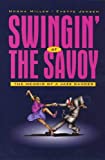
Book Review: Swingin’ at the Savoy: The Memoir of a Jazz Dancer

Swingin’ at the Savoy is a beautiful memoir of one of the greatest Lindy Hop dancers of all time. Ms. Miller was not only one of the dancers that defined Lindy Hop, but as Lindy Hop faded for a while post World War II, she launched a career as a Jazz Dancer.

It’s a real treat to see a slice of history that’s so important to American partner dancing through the eyes of one of its early practitioners. 

I was especially touched by being able to catch a glimpse of what it was like to be a strong woman of color in a male-dominated world. Ms. Miller jumps from the pain of the internal politics of Whitey’s Lindy Hoppers to the joy of dancing to Artie Shaw and Benny Goodman to tales of traveling overseas.

There is, unsurprisingly, a good amount of overlap between this memoir and Frankie Manning’s Ambassador of Lindy Hop. Having read them both, I feel like they complement each other and help paint the picture of the early Lindy Hop scene from somewhat different perspectives.

I grew up listening to and playing Big Band Music – Count BasieGlen Miller, and Duke Ellington were some of my favorites in the genre, and she met and danced to them all live. Even though I built music4dnace.net in part to be able to find songs to dance to that aren’t part of the genre that they evolved with, one of the reasons I was attracted to Swing dancing in the first place is my love for Swing Music.  

Another tidbit in this memoir was the mention of the “Savoy Hostesses” and the fact that you could purchase a dance with one for a quarter. They would even teach you to dance if necessary. This was the first I had seen of historical backing for the core plot line of a fun coming-of-age novel I read a while back called Ten Cents a Dance. Set in a 1940’s Chicago dance hall, the main character is something like what Ms. Miller describes as the Savoy Hostess. Of course, as I write this, I realize I must not have done even a light search on the background when I read the book. There is plenty of information about “Taxi Dancers” and even a song, a film, and another book called “Ten Cents a Dance,” all about dance hostesses or taxi dancers.

Swingin’ at the Savoy also includes a preface and epilogue that give some great context. “Portrait of the Swing Era” has a bunch of great tidbits, including some history of the Jitterbug that I’m hoping to do some more reading on and share with you. And “The Future of the Lindy and The New York Swing Dance Society” puts some perspective on the New York Swing revival.

Overall, Swingin’ the Savoy is an enlightening read about a fantastic woman.

As always, I’m interested in your feedback, so please share any thoughts and ideas about this post or the site by commenting below or using other feedback mechanisms listed here. In addition, if you enjoy the site or the blog (or both), please consider contributing in whatever way that makes sense for you.


Swingin’ at the Savoy: Paperback Edition

Swingin’ at the Savoy: Audible

Note: If you found this book through this blog, please be kind and click on one of the links above to purchase it. This helps support the blog. If you’re feeling especially generous (or just like the blog a lot), clicking on the Amazon links in the blog or on the music4dance site and then doing your regular, unrelated shopping, which also helps support the site as a very small fraction of those proceeds will be directed to musci4dance.