
Tag Archives: Swing

Please help us catalog new music

A Swing Band leader (Glenn Crytzer) reached out to me recently, asking if it would be possible to add his entire catalog to the music4dance.net database. He found a few of his songs already listed, but has a published catalog of well over a hundred songs, most of which should be danceable to partner dances (mostly Swing variations).

Glenn graciously provided me with a spreadsheet of his music, and I was able to upload it to music4dance. This was particularly nice because I could include his data on tempo and genre tags, as well as some other miscellaneous metadata from his comments that I turned into tags. But that led me to the next issue – his data didn’t include anything about which dance or dances would be particularly suitable for each of the songs. Which is entirely reasonable, he’s not actually dancing to them, and most of them would work for a generic swing night – the dancers can choose to dance Lindy, Balboa, East Coast, or something else to any particular song. Although that’s a vast over-simplification, if you’re interested in how a musician thinks about these things, Glenn’s article On Programming an Original Swing Music Album is an illuminating read.

That leaves me in a bit of a bind. I can certainly go through the 100+ songs myself and vote on which dances work for those songs, and I probably will. But I dance East and West Coast Swing and a bit of Lindy and Charleston – oh, and a bit of Slow Foxtrot, as Foxtrot and Swing music overlap – so I’m not familiar enough with some of the other dances to say whether a song would be suitable for Balboa, Jump Swing, Quickstep, etc. And more importantly, even with the dances I do know well, I’m only one opinion. Music4dance works much better when others in the community contribute by voting on dances that they are familiar with for songs in the catalog.

That line of reasoning led me down the path that I’ve considered several times before, of unlocking premium membership for free for members who vote on dances. I’ve thought and rejected several complex mechanisms to enable this. While some of them seem plausible, I don’t want to spend time writing code until I prove that there are enough members of the music4dance community willing to participate to make it worth my while.

Something about the interaction with Glenn and the thought that I’d love to get his songs showing up with associated dances sooner rather than later made me look at the problem a little differently. What if I went the low-tech/high-trust method of giving out premium memberships to anyone who committed to voting on a certain number of songs per month? I wouldn’t have to write any code at all for that, and if enough people take me up on it to make manual management of the “feature” cumbersome, I can always write the code later. That will also let me play with the parameters without building a whole dashboard of knobs and dials.

The Offer:

If you are familiar enough with at least one dance to confidently listen to an arbitrary song and say, “I would dance that dance to the song,” and are willing to spend some time each month doing that on the music4dance website, I’ll extend you a premium membership for each month that you do. Furthermore, I’ll take your word for it and give you the premium membership ahead of time. That will let you look at songs that no one has voted on yet (which is essential for things like the Glenn Crytzer catalog – at least until someone has voted on a song). To make this somewhat measurable on my end, let’s set the number of votes at 50 per month to keep your premium membership going. I’ll reserve the right to change the parameters at any time, including cancelling the program, since this is an experiment. But at minimum, if you contact me to try this out, you’ll get the first month of premium free, and I won’t turn that off before the end of the first month unless I detect you doing something malicious.

Why should you care about a premium account? In this case, it allows you access to more songs, including songs that no one has voted on yet and songs that I’ve pulled in from someone’s list of danceable songs but haven’t matched to a music catalog. With a premium account, ad content is turned off, and you can export results of your searches to Spotify – see details here.

Musicians (a quick aside):

Before I get into the nitty-gritty details of how to take me up on this offer, let me take a moment to reach out to other musicians who would perform music suitable for partner dancers. If you are interested in having me bulk upload your catalog to music4dance, please contact me, and I’d be happy to do that.

Here’s how to go about taking me up on my offer:

  • Create an account on music4dance.net here if you don’t have one already. (Account management help)
  • Email me at info@music4dance.net from the email you used to create your music4dance account and include “I’d like to Help Cataloging Music” in the title. Feel free to include any other details you’d like to share or questions about the offer in the email. I read everything that I get.
  • I expect to be able to upgrade your account and respond to your email within forty-eight hours (but this is an intention, not a commitment – read the notes above about this being an experiment) – if you haven’t heard from me in that timeframe, please try again.
  • Read the information about Dance Tags to understand how to vote.
  • Start voting!

This offer is for voting on dances, not for clicking the like button on songs. The latter is a feature that helps you organize your use of the music4dance catalog, but doesn’t do much for other users, so I’d like to focus on the core music-to-dance relationship of the voting mechanism for this offer.

Useful links:

What if you want to support music4dance but don’t have either the time or the experience to catalog songs by dance? There are plenty of other ways to contribute, as described on our “Contribute” page.
What is that dance called? Swing, East Coast Swing, Triple Swing, East Coast, or…

When I got into the business of categorizing music by dance style, I knew there would be a lot of ambiguity involved. However, some of the passion behind people’s opinions about what a dance should be called or what tempos are acceptable for the dance called X still takes me by surprise. Several times a year, I get an email from someone who is absolutely livid that I “got the tempo of West Coast Swing completely wrong” or called a dance “Lindy Hop” rather than “Swing” or some other variation on the theme.

I learn a lot from the people who send these emails, and often learn something that helps me improve the site or my general knowledge of dance. One feature I added a while back, based on some of these interactions but haven’t discussed in the blog, was the idea of having “synonyms” for dances.

The way music4dance works, I have to have an unambiguous and unique name for a dance. This leads to somewhat clunky names at times – for instance, the dance that most dances consider “Waltz,” I call “Slow Waltz” to distinguish it from “Viennese Waltz” and to allow for a catch-all category of Waltz. But I want to be able to show other names for dances so people can find the dances even if they know them by another name. This applies both to cases where the dance really is the exact same dance; it’s just named differently to disambiguate it, and in cases where the parameters for what music works are close enough that it makes sense to use the same list of music for both dances.

Cases of actual synonyms:

Cases where the dances are different, but the music is the same:

  • Castle Foxtrot = Slow Dance – I started categorizing music that was basically Slow Dance music as Castle Foxtrot, which is a legacy dance that some studios occasionally teach because Castle Foxtrot showed up in my searches as I was designing the site, and fit nicely into the tempo spectrum of Foxtrot-like dances. The practical use of this ended up being more for people looking for “Slow Dance” music in wedding contexts, so I added the Slow Dance synonym. Perhaps I should change the primary name?
  • Hustle = DiscoFox – As far as I can tell, these have evolved into different dances but are still danced to similar music. But that is based on web searching rather than personal experience, so please correct me if I’m wrong. I’m also now second-guessing myself as to whether I should add “Swing Fox,” “Disco Swing,” and “Rock Fox” as synonyms, or if one or more of these rates is its own category.

In any case, if you go to the main “Dance Style” page, you’ll see all the styles we’ve set up, along with their synonyms. As this list grows, being able to filter it is more important, so the filter control acts on both the primary name and the synonym. I also handle the synonyms when you search in the search control in the menu bar. So if you type “Slow Dance” in that search box, you’ll find a list of slow dance songs (that are actually tagged as “Castle Foxtrot”). I don’t convert the name of the tag in the results, but I could if that seems important…

I’m posting this now in part because, during my recent round of updates, I broke the showing of synonyms in the Dance Styles page and then realized I hadn’t ever asked for feedback on the feature. The only mention in this blog was the post when I added it as an afterthought to adding Single Swing to the catalog.

Are there other synonyms that I should add? Are there dances that I’ve listed as synonyms that I should break out into separate dances? If you have ideas about this post or the site, comment below or use other feedback mechanisms listed here. And if you enjoy the site or the blog (or both), please consider contributing in whatever way makes sense for you.

Western Partner Dances and Line Dances?

One of the comments on my last post asked:

A lot of our dance groups over here love to dance the partnered dance sea shells The song “Blue night” by Michael learns to Rock sings the song they dance to. Is there a list on your data base of similar songs to that one that they can also dance Sea Shells to?

This question lead me down one of those beautiful rabbit holes that dance often does.

I had never heard of this dance, but I looked it up and found a YouTube video with the choreographer demonstrating the dance. It was 32 counts (four 8-counts) danced line of dance using a vocabulary that I’m not familiar with but would guess was some flavor of country dance.

Now, when I was learning to lead as a ballroom dancer, my teacher often put together a few eight counts of choreography that I could use so that I wouldn’t have to think as much about what my next move was and concentrate instead on leading my partner and making sure I didn’t run into anyone (or step on my partner’s feet). I understand this is a common technique in the Ballroom community. I ran across similar methods when learning social dances in group classes. So my first instinct was – this is just a slightly more formalized version of that technique – and it has the advantage that your follow knows that you will be doing this same sequence, so the lead should be much easier.

Following that thread, I listened to the song more closely and counted it out. It’s about 97BPM 4/4 and had the feel of an International Rumba or Bolero to me. This gave me the first level answer to the question of what else would someone play if people wanted to dance “Sea Shells” – I went to Advanced Search and selected Bolero and Rumba, limited the tempo to 95-99 BPM (an arbitrary bracket around 97 BPM) and sorted by the most popular – that resulted in this list. I’m convinced that someone who learned “Sea Shells” could dance it to any of the top songs on the list.

But I felt like I was missing something fundamental about this type of dance, and I dug deeper. I didn’t have to do much searching to find a “Dance Step Sheet” with the specific choreography that Dan and Kelly Alboro created. In fact, there were a bunch of places that listed this dance and described the steps. Poking around the websites that hosted such sheets, I found that this is a whole thing. Please pardon my ignorance here since I’m sure many people reading this post know more about such things than I do, but the concept of choreographing a few eight counts of a partner dance and naming it was completely new to me.

My understanding from a relatively brief perusal of these sites is that there is a branch of country dancing similar to line dancing where someone choreographs a number of eight counts using a specific vocabulary, teaches it at an event, and then a whole group of people can dance the same “dance.” The most experience I’ve had with these personally is Wedding Line Dances, but it seems like a fun experience. Doing this kind of dance with a partner rather than the individual line dances I’ve seen in the past feels like a great way to become more comfortable as a partner dancer. In any case, I’ll put a bunch of links at the bottom of this post to sites written by people who know a lot more about this than I do.

Back to the original question: Another answer is that some of the “Dance Step Sheets” for “Sea Shells” list an alternate song that it can be danced to. The song they list is “jumpin’ the jetty” by Coastline. Now, this is a song that shouts Swing to me and is considerably faster (126BPM) than “Blue Night.” So that blows my original thought out of the water. Here is a search for swing songs between 124 and 128BPM. Unsurprisingly, there is no overlap between this list and the one I generated for “Blue Night.” I suspect someone who knows the choreography well can probably dance it to any reasonably consistent 4/4 music at a wide range of tempos. For those who are less expert, there is perhaps an advantage to being on the slower side and having strong phrasing. And I’m sure there are plenty of folks who only want to dance this particular dance to the music that they learned it to in the first place. But as I’ve said repeatedly, I’m way out of my depths here, so if someone who actually knows something about this kind of dancing would care to jump in and help me out, please do.

The last thing I wanted to say about this subject is that I’ve had several requests to support country and line dances on the site. I plan to enable the more traditional country partner dances once I get past some infrastructure issues that are currently blocking me from adding a bunch of new dances. I’m confident I can do that and seed the lists from reliable sources to get something up and running despite my lack of specific knowledge of those dances. Then, hopefully members of the community who know more about those dances can add more. Please let me know if you’re interested in this feature. The more people raise their hands for this feature, the faster it will move up my TODO list.

I hadn’t devised a method for handling line dances before this, partly because I assumed they were all choreographed to a single song. It didn’t seem like the system I’d built would handle that very well. But based on this experience, I’ve come up with a way to “support” line dances without adding code. I’ll throw it out there, and if anyone wants to start adding line dances to the database, I’ll document it more closely and possibly even add some code to make the experience smoother. The idea is pretty simple. Just add a comment with a quoted version of the name of the line dance to the song. Then, people can search on that and get a list of songs to line dance to. Here’s the search for “Sea Shells,” which returns the two songs I’ve discussed in this post.

I will dig myself out of the rabbit hole for now and see if I can make some progress on the infrastructure issue I mentioned above.

Please let me know if you have any thoughts about the subject of this post or the site by commenting below or using other feedback mechanisms listed here. And if you enjoy the site or the blog (or both), please consider contributing in whatever way makes sense for you.

Some interesting links related to the Western Partner dances:

Copper Knowb Stepsheets

DiceMemory Parter / Circle Dances

DiceMemory Line Dance Steps

CoutryDancingTonight – 10 Popular Partner Country Dances

Wikipedia – Partner Dance

Wikipedia – Country Western Dance

Wikipedia – Round Dance

We’d like to dance a “real” partner dance as the first dance at our wedding (Part I: We already chose our song)

Wedding season is upon us, and one of the things that come with weddings is receptions with first dancesfather/daughter dancesmother/son dancesmother/daughter dances, and any other variation you can think of. I think it’s extra special when those dances are recognizably partner dances like FoxtrotRumba, or Swing. Of course, I have a bit of a bias.

If you want to find a dance that fits the song you love, here are some things that can help. In my next post, I’ll cover the other direction – finding a song to fit your dance.

First, consider visiting your local dance studio and asking a professional. The other professional that could help is your wedding DJ; sometimes, they are also dance teachers or at least know a dance teacher to connect you with.

In tandem with going to a professional, some features of music4dance.net can help. The first is to try searching for your song – you can type the title into the search box in the menu bar or on the Song Library page. If it’s a particularly popular song, you might also include the artist to see if you can get to the specific version of the song. But oftentimes, variations on a song by different artists still maintain enough of the same characteristics to be danced to the same dance. So be creative in your search and see what you come up with.

For example, try typing “Fly me to the moon” into the search bar – including the quotes to get songs with that full title rather than all the songs with those keywords. And we’re probably most interested in the Frank Sinatra version, so scroll down to that or add Sinatra (outside of the quotes) to the search.

You can already see which dances folks in the music4dance community have voted on to dance to this song. There is quite a spectrum. If you click on the song title, you will get more details. Among other things that will show you that Slow Foxtrot is the most-voted dance for this song, some folks have voted for East Coast Swing and Jive but have noted that it’s slow for those dances. That’s not necessarily bad; you could speed up the song a bit (modern technology is fantastic) and get it to something still slow for ECS but not crazy slow – which might be just the right tempo for a first dance.

But what if you can’t find the song in the music4dance catalog? There is another tool that can provide some help. Try looking at the tempo counter tool (and its help page). Counting out the song’s tempo in this tool will show you which dances can technically be danced to the song. The tempo counter result doesn’t tell you anything about if the style of the song fits the dance. But this is also pretty interesting because if you’re going to go all the way and choreograph a first dance, sometimes doing something that’s a little out of a stylistic mismatch can be pretty effective. Choreographing a dance to a song that doesn’t quite fit is frequently done with showcase dances like those you see on Dancing with the Stars and can be very effective in creating a memorable wedding dance.

I hope this helped and that you really enjoy your first dance, not to mention the rest of your wedding and reception.

If you used the second method I mentioned or the help of a professional to find a song/dance combination for any of your wedding dances, please consider becoming part of the music4dance community and adding your wedding songs to the catalog.

As always, I’m very interested in your feedback, so please share any thoughts and ideas about this post or the site by commenting below or using other feedback mechanisms listed here. In addition, if you enjoy the site or the blog (or both), please consider contributing in whatever way makes sense for you.

P.S. This is a reboot of a very early blog post I wrote in 2015. Since the site has been through a couple of significant over-hauls since I wrote the first pair of wedding music posts, I think it’s worthwhile revisiting them. I may end up doing a more systematic rewrite. In that case, I’ll try to figure out a better way to index the posts to remove duplicates and/or make the fresher content pop up ahead of the old content.

New Dance: Single Swing

I’ve added Single Swing as a dance style that can be searched on and voted for in the music4dance catalog. While I think of this dance as a short-cut to use when I want to dance East Coast Swing to faster Jive or Lindy-Hop music, I’ve received enough feedback from the community that it’s considered a unique dance in its own right that I am happy to add it. From some light searching on this dance, it has gone by several names in different regions and times. Some of the names I saw were “Sing-time Swing,” “Single rhythm swing,” and “East Coast Single Swing.” It’s also one of several dances that have been called the Jitterbug at some point in the twentieth century.

I set the initial tempo to 140-184 beats per minute (35-46 measures per minute), which I found listed in several places. Since, as far as I can tell, this isn’t a competition dance, I haven’t found an “official” tempo range and am happy to adjust if someone with more expertise in this particular dance would provide feedback. I also seeded this list of songs with publicly available lists that sounded reasonable. Please feel free to go through to vote up other swing songs that you think are good fits for this dance. You can do this by adding songs or by searching for Swing songs in the Single Swing tempo range and voting up the ones that sound like good Single Swings. I’m also happy to bulk upload lists if you’ve got a CSV file or Spotify playlist of single swings that you’d like me to include.

Over the past several years, I’ve been moving the site in a direction where I hope to be able to handle more different dance styles and add them more easily. I’m getting closer to being able to add dances quickly. However, to add a lot of different dances, I’ll have to replace the underlying search engine (or wait for it to add some new features – it will be interesting to see which comes first). Some of the things I’ve done are to make lists of dances somewhat flatter and allowing search by name in most places where dances are listed. I’ve loosened the tie between types of dances (e.g., Sing, Waltz, Latin) and dance style, so that dance styles don’t have to be as strictly categorized as before. I’ve also added synonyms to dance styles, so in most places where you see the name of a dance style, other names of the dance are shown in parenthesis.

In any case, I’m always interested in what you think would be most helpful. I’m sure there are plenty of dance styles I’m not cataloging that fit into the broad category of partner dances that are danced to a specific tempo range or style of music. If you have a dance style suggestion or other comments, please feel free to reply to this post or contact me here. In addition, if you enjoy the site or the blog (or both), please consider helping by adding to the Single Swing catalog or contributing in whatever other way makes sense for you.

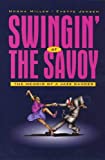
Book Review: Swingin’ at the Savoy: The Memoir of a Jazz Dancer

Swingin’ at the Savoy is a beautiful memoir of one of the greatest Lindy Hop dancers of all time. Ms. Miller was not only one of the dancers that defined Lindy Hop, but as Lindy Hop faded for a while post World War II, she launched a career as a Jazz Dancer.

It’s a real treat to see a slice of history that’s so important to American partner dancing through the eyes of one of its early practitioners. 

I was especially touched by being able to catch a glimpse of what it was like to be a strong woman of color in a male-dominated world. Ms. Miller jumps from the pain of the internal politics of Whitey’s Lindy Hoppers to the joy of dancing to Artie Shaw and Benny Goodman to tales of traveling overseas.

There is, unsurprisingly, a good amount of overlap between this memoir and Frankie Manning’s Ambassador of Lindy Hop. Having read them both, I feel like they complement each other and help paint the picture of the early Lindy Hop scene from somewhat different perspectives.

I grew up listening to and playing Big Band Music – Count BasieGlen Miller, and Duke Ellington were some of my favorites in the genre, and she met and danced to them all live. Even though I built music4dnace.net in part to be able to find songs to dance to that aren’t part of the genre that they evolved with, one of the reasons I was attracted to Swing dancing in the first place is my love for Swing Music.  

Another tidbit in this memoir was the mention of the “Savoy Hostesses” and the fact that you could purchase a dance with one for a quarter. They would even teach you to dance if necessary. This was the first I had seen of historical backing for the core plot line of a fun coming-of-age novel I read a while back called Ten Cents a Dance. Set in a 1940’s Chicago dance hall, the main character is something like what Ms. Miller describes as the Savoy Hostess. Of course, as I write this, I realize I must not have done even a light search on the background when I read the book. There is plenty of information about “Taxi Dancers” and even a song, a film, and another book called “Ten Cents a Dance,” all about dance hostesses or taxi dancers.

Swingin’ at the Savoy also includes a preface and epilogue that give some great context. “Portrait of the Swing Era” has a bunch of great tidbits, including some history of the Jitterbug that I’m hoping to do some more reading on and share with you. And “The Future of the Lindy and The New York Swing Dance Society” puts some perspective on the New York Swing revival.

Overall, Swingin’ the Savoy is an enlightening read about a fantastic woman.

As always, I’m interested in your feedback, so please share any thoughts and ideas about this post or the site by commenting below or using other feedback mechanisms listed here. In addition, if you enjoy the site or the blog (or both), please consider contributing in whatever way that makes sense for you.


Swingin’ at the Savoy: Paperback Edition

Swingin’ at the Savoy: Audible

Note: If you found this book through this blog, please be kind and click on one of the links above to purchase it. This helps support the blog. If you’re feeling especially generous (or just like the blog a lot), clicking on the Amazon links in the blog or on the music4dance site and then doing your regular, unrelated shopping, which also helps support the site as a very small fraction of those proceeds will be directed to musci4dance.

Ask music4dance: Should you add a Single Swing Dance category?

Arne had another great question (paraphrased): I see Single Swing being danced a lot these days.  Should music4dance add another swing category? Is Single Swing a local thing, national, really new? Do people still dance triple-step Swing?

Here is a slightly cleaned-up version of my response:

East Coast Swing (the triple step variety) is a competition dance, so it’s still being danced regularly in ballroom environments. But the Lindy revival of the ’90s seems to have dominated the social swing scene from what I can tell.

In the ballroom community that I learned to dance in during the ’90s, they used the term East Coast Swing to refer to the competition dance, which was definitely a triple-swing. But if one was dancing socially to music too fast to comfortable dance triple swing, you would revert to something they were calling Single Swing or East Coast Single Swing or some variation on that.

I fell down a rabbit hole, trying to see if my recollection had anything to do with current thinking on this. This video shows a “Single Swing” basic that is exactly what I think of as Single Swing. Duet Dance and DanceTime both have descriptions of various kinds of swings. They seem to agree that what I think of as Single Swing could also be reasonably called “The Jitterbug” (which I had thought was just a different name for Lindy Hop). As with any of this stuff, the history is so twisted up that there probably isn’t a correct answer, or if there is, it would require a historian to dig up.

Even without adding a new dance, you should be able to find some good ideas for Single Swings by searching for generic Swing in the tempo range between 140 and 184 MPM. When I first responded to Arne, I had broken that feature, but it’s now up and running again. So you can go to the Advanced Search Page, choose Swing in the dances section, and type in the tempo range you’d like to filter on. 

I am interested in incorporating Single Swing into the music4dance catalog. Should I do this as Jitterbug or Single Swing or by adding single and triple tags to East Coast Swing? I’d love to get others’ thoughts on this so please feel free to send feedback.

Asking to add a new dance style to the catalog is certainly in the top ten questions I’ve been getting. So I’ve been working on streamlining how I manage dance information to make that easier. Most of this work has been under the hood (although the bug mentioned above was one side effect). One of the more visible aspects of this is a small redesign of the Dance Styles page to simplify it a bit and hopefully make it a little more usable.

As always, I’m very interested in your feedback, so please share any thoughts and ideas you have about this post or the site by commenting below or using other feedback mechanisms listed here. In addition, if you enjoy the site or the blog (or both), please consider contributing in whatever way that makes sense for you.

Dance as Language

I was delighted to find that the folks at the Rough Translation podcast produced an episode called May We Have This Dance?  For those who haven’t heard of it, Rough Translation describes itself as “a podcast about cultural mistranslation and what we can learn from them.”

In this episode, they explore the Lindy Hop and its odd evolution from a dance created by African Americans in 1920s Harlem to its revival when it was adopted by the Scandinavians (and others) in the 1990s.  Not being from either culture, I don’t feel equipped to talk about the core of the cultural issues addressed in the podcast and accompanying article.  But I would recommend both Frankie Manning: Ambassador of Lindy Hop and Stompin’ at the Savoy if the podcast piques your interest in the origins of the whole swing family of dances.  In addition, I haven’t read Swingin’ the Savoy yet but it is definitely going into my queue.

I will say that I particularly liked the discussion at about 30 minutes into the podcast about when LaTasha and Felix clicked as dance partners and dance became like a conversation.  I feel like the best of my social partner dancing has felt like speaking a language that’s more expressive than English.

Definitely check out the reference material they have at the end – if you haven’t seen the Lindy Hop sequence from Hellzapoppin, you’re in for a real treat and the clip of LaTasha and Felix was lots of fun as well.

Finally – they provided a list of LaTasha’s favorite music to dance to which I added to the music4dance catalog and then exported as a Spotify playlist.

As always, I’m happy for feedback and if you enjoy the site or the blog, please consider contributing in whatever way that makes sense for you.

Ask Music4Dance: How do I find a “Pop Rock” song to dance a Slow Foxtrot to?

This is another question that I’ve seen a bunch of variations on over the years.  It’s one of the reasons that I started music4dance.  I love Big Band music and grew up playing Basie and Goodman in Jazz bands.  And my dad was a big fan of Buddy Rich.  On top of that Foxtrot and Swing co-evolved with this kind of music, so there is no problem finding plenty of music of that style to dance to.

But I’m also pretty eclectic in my musical tastes and some of the most fun I’ve had as a dancer is choreographing an exhibition dance to music that wasn’t written to be danced to – or at least not a traditional ballroom style dance.  There are obviously limits to this, but you see it all the time on shows like Dancing With the Stars and So You Think You Can Dance.

When I received a variation on this question again recently, I checked and realized that in my big rewrite of the site, I had broken the easiest way to do this kind of search.  This is now fixed,  so you can go to the info page for the dance style you’re interested in by choosing “Dances” from the Music menu. Pick the dance style you’re interested in (in this case Slow Foxtrot). Scroll down to the bottom of the page and you’ll see a tags section.  This is a tag cloud that includes all of the tags (other than dance style tags) that people have associated with songs that someone has also tagged as danceable to Slow Foxtrot.  From there you can explore all the unusual songs and musical styles that someone at some point has attempted to dance the Slow Foxtrot to.

I have to admit, going through some of these, that there are plenty that are a stretch – even with a choreographed set piece.  But still a lot of fun to think about.  If you go down this road and find things that stretch your ability to imagine dancing a particular style to and feel that they’re a mistake rather than a fun (but out there) variation, please feel free to vote them down.  Remember all of this content is crowd-sourced, so you’ve got a vote if you choose to use it.

One thing that I realized as I was writing this is that there isn’t an easy way to go the other direction.  You can use Advanced Search or the main Tag Cloud to list all of the songs associated with any tag.  But that doesn’t give you a direct list of all of the dance styles, you have to scroll through all the songs and figure that out yourself.  Let me know if that would be interesting to you and I’ll increase the priority of that feature. 

And as always I love to hear from you – so please send me feedback about the site or with questions about this post.  I may even feature your question in a future post.

Quick Tip:

If you want to be able to listen to a Spotify Playlist of all of the songs that you find in a search like the one above (or any other search on the site), you can do so by signing up for a premium subscription. I took the liberty of generating a playlist for the example above here in case you want to check it out – while you’re on Spotify, please “like” the music4dance account and any of the other playlists that you enjoy.

How do you like to see lists of music to dance to?

One of the core features of music4dance is to be able to list songs for dancing in a bunch of different ways.  As I noted a little while ago, I’m at the point in the process of the site upgrade where I’m reworking that core functionality.  In a world of infinite (or even abundant) resources , I’d get the new functionality up and running and give you the opportunity to switch back and forth between the new and the old for some period of time and give me your feedback.  While that’s a bit out of my reach, it occurred to me that it’s pretty easy to just roll out what I’ve got on some of the pages and leave the old stuff in place on others. That will give you the opportunity to see them both and compare and give feedback.

As of this writing (November 15th, 2020) I’ve got an initial version working and rolled out to some of the pages.  You can see the new song lists on  the Holiday Music page including the specific holiday dance variants like Holiday Cha Cha and Holiday Foxtrot, the New Music page and the dance pages including both the dance group pages like the Swing page and specific dance pages like the Rumba page.  The old version is still live in the basic song library and as the results of advanced searches as well as any of the links from other places on the site that bring up a song list.

Please take a look and let me know what you think.  I’m particularly interested in anything that I left out in the new version that you used in the old version.  But I’m also always open to feedback and ideas for what I could do to make this content more helpful for you.

As always, thank you for supporting music4dance and please feel to provide feedback on the subject of this post or anything else relating to music4dance.